
Calorie counting can be useful. It gives you a rough idea of how much energy you are eating, helps explain changes in body weight, and can make portion sizes easier to understand.
But calories are only one part of the nutrition story.
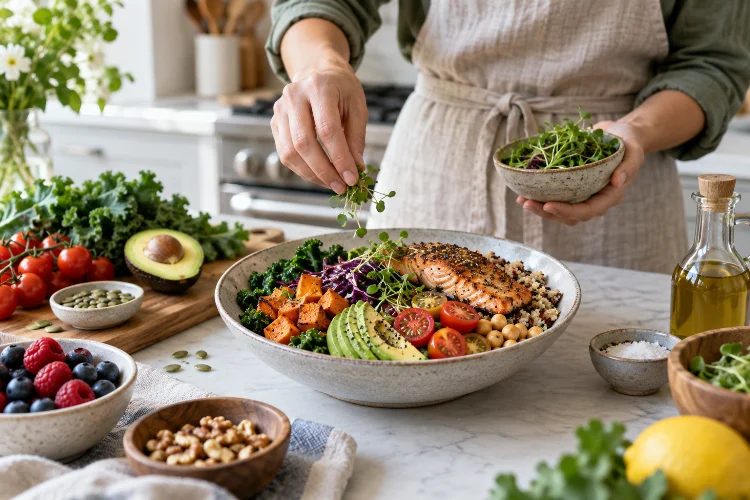
Understanding why food quality matters beyond calorie counting means looking at what those calories actually contain. A 300-calorie meal built around vegetables, whole grains, and protein can provide fiber, vitamins, minerals, and lasting fullness.
Another 300-calorie snack may deliver mostly refined carbohydrates, added sugar, sodium, or saturated fat with far fewer essential nutrients.
That does not mean certain foods are automatically “good” while others are “bad.” It means foods with similar calorie counts can affect hunger, nutrient intake, eating patterns, and long-term health in very different ways.
Harvard’s Nutrition Source notes that calories still matter for weight management, but food quality also plays an important role in maintaining a healthy eating pattern.
So instead of asking only, “How many calories are in this?” it can be more useful to also ask, “What am I getting from those calories?”
Calories Tell You Energy, Not Nutritional Value
A calorie is a measure of energy. It does not tell you how much fiber, protein, iron, potassium, vitamin C, calcium, or other nutrients a food contains.
That distinction is important because the body needs more than energy to function well.
For example, two slices of bread might contain a similar number of calories, but a whole-grain version can provide considerably more fiber and micronutrients than a refined white bread option.
The American Heart Association uses a similar comparison to explain nutrient density, noting that foods with similar calorie values can differ significantly in protein, fiber, vitamins, and minerals.
This is the idea behind nutrient density.
A nutrient-dense food provides a relatively high amount of beneficial nutrients for the calories it contains. Vegetables, fruits, whole grains, legumes, nuts, seeds, fish, and many minimally processed foods are common examples.
Calories answer the question, “How much energy is here?”
Food quality answers a much bigger question: “What else does this food give my body?”
Protein and Fiber Can Change How Satisfying a Meal Feels
Two meals can contain the same number of calories yet leave you feeling very different afterward.
Protein and fiber are two major reasons.
Protein-rich foods such as eggs, fish, beans, lentils, yogurt, tofu, and lean meats can help make meals more satisfying. Fiber-rich foods-including vegetables, fruits, legumes, and whole grains—can also slow eating and digestion while adding volume to meals.
Compare a sweet pastry with a bowl containing oatmeal, fruit, nuts, and yogurt.
The calorie totals could potentially be similar depending on portion size. But the second option may provide substantially more protein, fiber, vitamins, and minerals.
That extra nutrition may also help the meal feel more substantial.
The American Heart Association recommends dietary patterns rich in vegetables, fruits, whole grains, healthy protein sources, and minimally processed foods rather than focusing only on calorie totals.
This is why choosing food only because it is “low calorie” can sometimes backfire.
A very low-calorie snack that offers little protein or fiber may leave you hungry again soon, making the initial calorie saving less useful than it appeared.
Highly Processed Foods Can Influence How Much You Eat
Food processing is another reason calorie counting does not always tell the whole story.
A well-known randomized controlled trial from the National Institutes of Health compared ultra-processed and minimally processed diets in 20 adults. Participants were allowed to eat as much as they wanted.
During the ultra-processed diet, participants consumed roughly 500 more calories per day on average and gained weight, while they lost weight during the minimally processed diet period.
The meals presented were designed to be matched for several nutritional factors, including calories, macronutrients, sugar, sodium, and fiber.
This does not mean every processed food is unhealthy.
Frozen vegetables, canned beans, yogurt, whole-grain bread, and many other useful foods undergo processing.
The bigger concern is a dietary pattern dominated by highly processed products that are easy to eat quickly and may contain large amounts of refined starches, added sugars, sodium, or fats.
The study also highlights something calorie counting can miss: the structure and form of food may affect how quickly we eat and how much we eventually consume.
Food Quality Matters for Heart and Metabolic Health
Weight is not the only reason food quality matters.
A person could technically stay within a specific calorie target while eating a diet low in vegetables, fruits, whole grains, and essential nutrients. Calorie control alone would not automatically make that pattern nutritionally balanced.
Current American Heart Association dietary guidance emphasizes an overall eating pattern that includes plenty of fruits and vegetables, whole grains, healthy protein sources, unsaturated fats, and minimally processed foods while limiting added sugars, sodium, and saturated fat.
That recommendation reflects the fact that nutrition affects far more than body weight.
Food choices can influence blood pressure, cholesterol, blood glucose regulation, digestion, cardiovascular health, and overall nutrient intake.
This is where a strict calorie-only mindset becomes too narrow.
Someone may choose a 100-calorie snack because the number looks appealing, but if that food provides almost no fiber, protein, or micronutrients, another slightly higher-calorie option may actually fit their health goals better.
The cheapest calorie total is not always the best nutritonal bargain.
Not All Carbohydrates or Fats Are Nutritionally Equal
Calorie counting can also make foods look more similar than they really are.
A gram of carbohydrate provides roughly four calories, while a gram of fat provides around nine. But knowing that number does not tell you the quality of the food source.
Carbohydrates from lentils, oats, fruit, or whole grains come packaged with different nutrients than refined sweets or sugary drinks.
Similarly, fats from nuts, seeds, olive oil, or fish differ nutritionally from foods that are especially high in saturated or trans fats.
Harvard’s Healthy Eating Plate emphasizes food sources rather than simply counting macronutrients. It highlights vegetables, fruits, whole grains, healthy fats, and healthy protein sources while discouraging sugary beverages and heavily refined foods.
That perspective is useful because human nutrition is built around foods and dietary patterns, not isolated calorie equations.
This does not mean a cookie can never fit into a balanced diet.
It simply means that eating 500 calories of cookies and 500 calories of a balanced meal may produce the same energy number while supplying very differnt amounts of protein, fiber, minerals, vitamins, and other compounds.
A “Low-Calorie” Label Does Not Automatically Mean Healthy
Food marketing can make calorie numbers feel like a shortcut for judging health.
A product may advertise “100 calories” in large letters on the front of the package, encouraging shoppers to assume it is a healthier choice.
Sometimes it may be useful. Other times, the product might contain relatively little nutrition.
A better habit is to look beyond the calorie line.
Check the Nutrition Facts label for fiber, protein, sodium, added sugars, and saturated fat. Then look at the ingredient list and think about how the food fits into the rest of your diet.
The American Heart Association recommends focusing on nutrient-dense foods while limiting foods that provide a lot of energy but relatively few beneficial nutrients.
This does not require becoming obsessed with labels.
You can simply make comparisons.
If two breakfast cereals have similar calories, the one with more fiber, less added sugar, and a useful amount of protein may be the more satisfying choice.
Small comparisons like that can improve diet quality without turning every grocery trip into a nutrition exam.
How to Focus on Food Quality Without Ignoring Calories
The solution is not to completely forget that calories exist.
Energy balance still matters, particularly when someone is trying to gain, lose, or maintain body weight. Harvard’s Nutrition Source specifically notes that calorie intake matters while also emphasizing that quality is an important part of healthy weight management.
A more balanced approach is to consider both quantity and quality.
For most meals, start with foods that provide useful nutrition. Vegetables, fruit, whole grains, legumes, protein-rich foods, and sources of unsaturated fat can form the foundation.
Then think about portions based on hunger, activity level, personal goals, and overall energy needs.
You do not need every meal to be perfect.
A healthy eating pattern can include pizza, desserts, snacks, and other foods you enjoy. What matters more is the overall pattern across days and weeks.
Try thinking in terms of upgrades rather than restrictions.
Add vegetables to pasta. Pair fruit with yogurt or nuts. Choose whole grains more often. Add beans to soups or salads. Swap sugary drinks for water more frequently.
These simple changes can raise the nutrional quality of your diet without requiring constant calorie calculations.
Food contains calories, but it also contains protein, fiber, fats, carbohydrates, vitamins, minerals, and many other components that affect how your body functions.
That is why food quality matters beyond calorie counting.
Calories can help you understand energy intake, but they cannot tell you whether a meal is nutrient-dense, satisfying, balanced, or supportive of long-term health.
Two foods with similar calorie totals may differ dramatically in fiber, protein, micronutrients, processing, and their effect on eating behavior.
Instead of abandoning calorie awareness, put it in context. Pay attention to both how much you eat and what your meals are made from.
The next time you compare two foods, look beyond the number on the calorie line. Ask which option offers more nutrition, satisfaction, and value for your overall eating pattern. That small shift can make healthy eating feel much more practical.